01
Find the overlooked contribution
Research moved past the famous sale of Wayne's ten-percent share to the practical work he did at the company's beginning—and the reasons he made the decision he made.
MIMMS Museum of Software · Ronald Wayne
A cinematic museum introduction to Ronald Wayne—the third founder who drafted Apple's first partnership agreement, drew its original logo and wrote the Apple-1 manual.
The assignment
Turn a familiar technology myth into a human story people can enter.
01 / The problem
The challenge was not to list Ronald Wayne's contributions. It was to make people feel why they mattered.
Apple's origin story is already a cultural myth. Ronald Wayne is often reduced to the man who sold his share too early. The film needed to restore his role without turning him into a cautionary tale—and do it with enough clarity and momentum for a museum audience encountering the story on its feet.
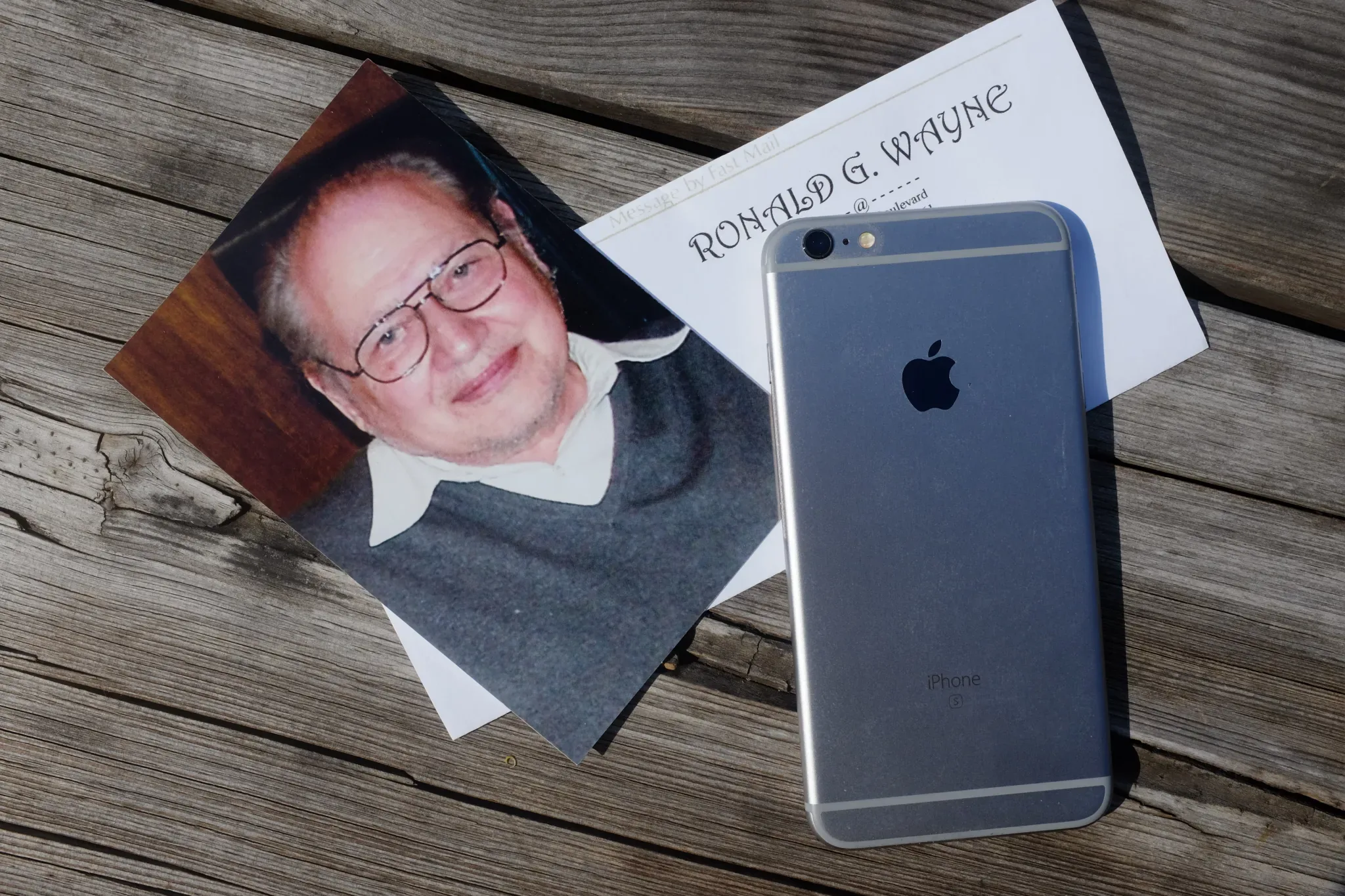
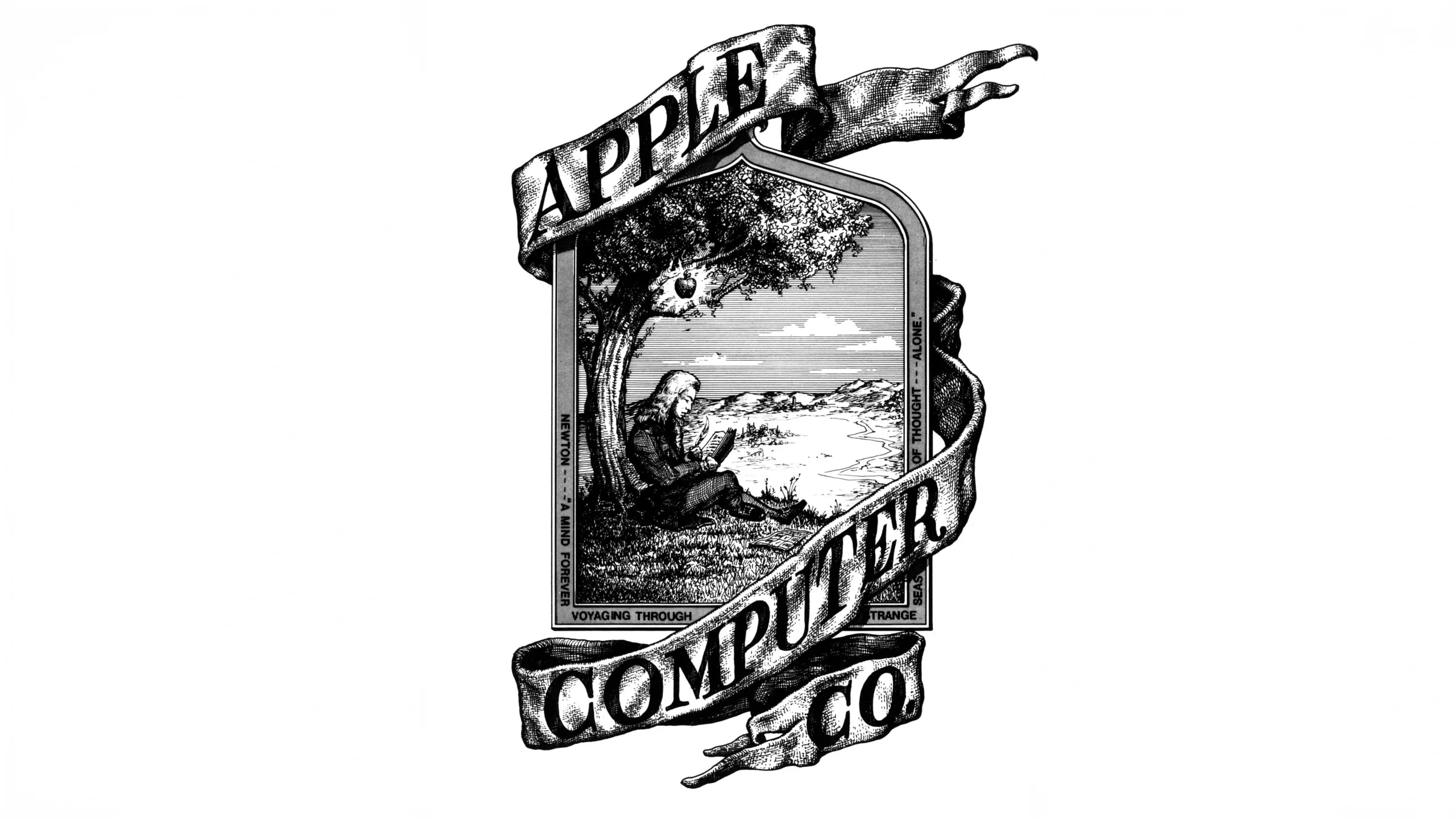
02 / What our lens uncovered
Wayne drafted the agreement, drew the first logo and wrote the first manual. Structure, symbol and language: three quiet acts that helped turn an idea into a company. Reframing the story around that contribution gave the film its connective image—the seed.
The seed was structure, symbol and language.
03 / The build
01
Research moved past the famous sale of Wayne's ten-percent share to the practical work he did at the company's beginning—and the reasons he made the decision he made.
02
Archive, documents, restored imagery, constructed scenes, narration and motion design work as one continuous line rather than a collection of historical facts.
03
A museum viewer may arrive midstream, stand, walk or look away. The pacing, scale and visual clarity had to keep returning them to the essential human story.
04 / Visual Intelligence
Ronald Wayne as a foundational author of the beginning—not a piece of Apple trivia.
Measured, practical and independent. The story respects his decision instead of manufacturing regret.
Beginnings are built by people whose names do not always survive the mythology that follows.
Cinematic and accessible, with respect for the evidence and no need to lecture.
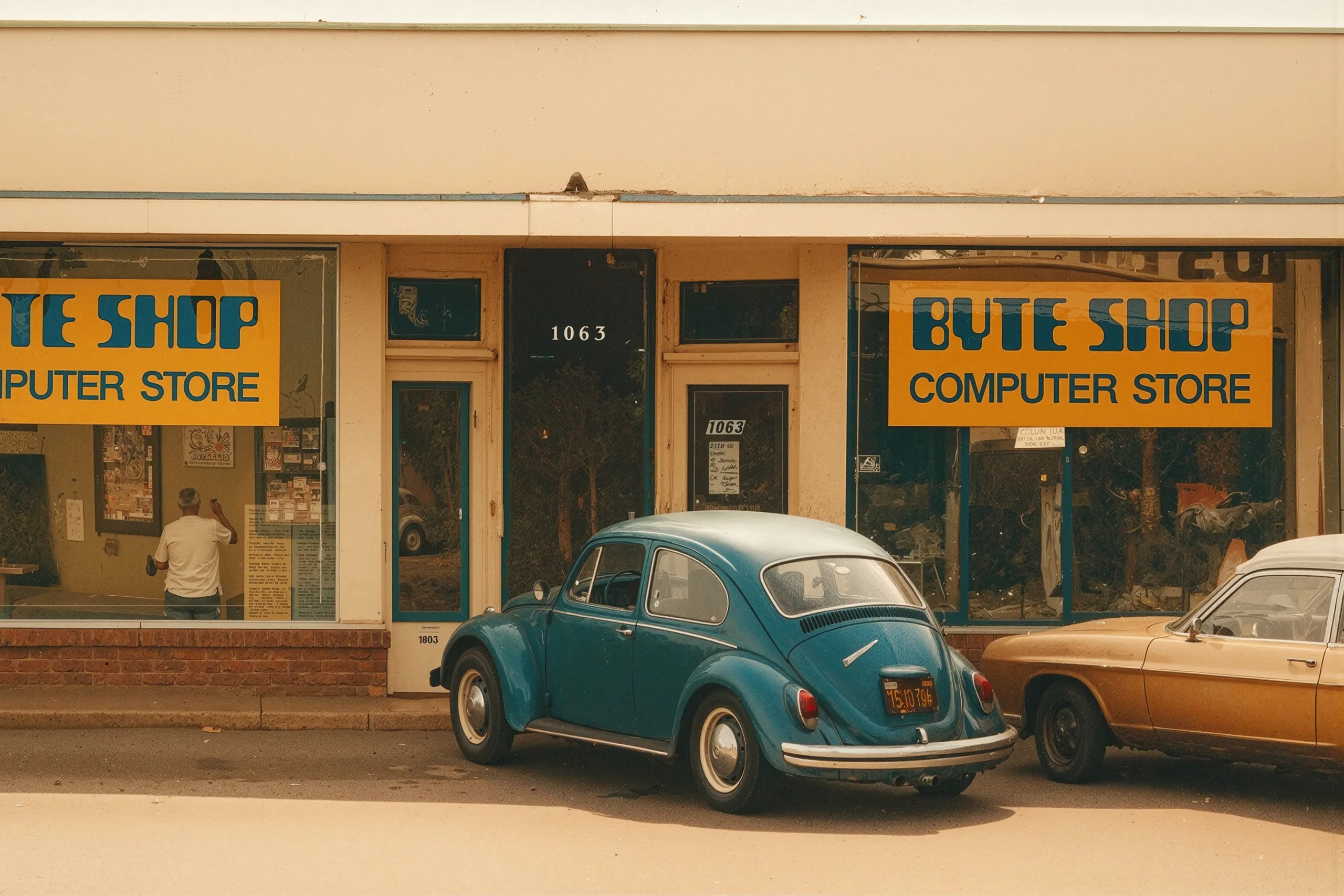
Tactile documents, period environments, portraiture and graphic momentum give history presence.
Period texture meets clean museum readability, bringing the past into the room without flattening it.
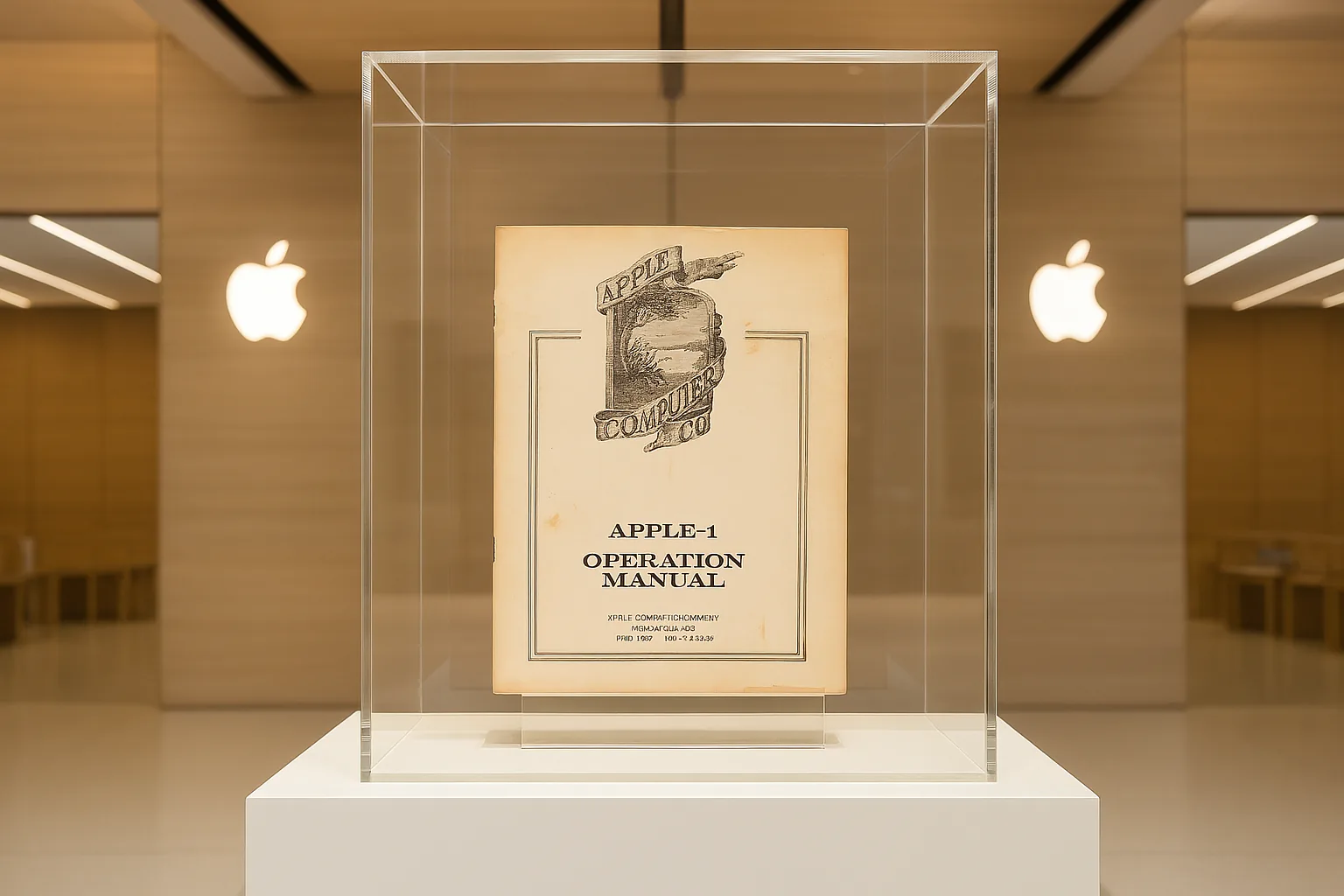
05 / Making history visible
Historical photography, documents and known chronology form the ground truth. Restored imagery, constructed scenes and motion design help the viewer enter that world. Generated material is directed as interpretation—not presented as historical evidence. The image shown here is an installation visualization, not a photograph of the delivered museum display.
06 / The result
The delivered film gives Ronald Wayne a clear place in the Apple origin story and gives the MIMMS Museum of Software a concise cinematic entry point into a larger history. Public audience response and installation details are not yet confirmed, so the case claims the finished communication—not invented attendance or engagement.
Questions from the case
No. HumanMedia created it on behalf of the MIMMS Museum of Software in Alpharetta, Georgia. Apple Inc. was not the commissioning institution.
Because his contribution reveals an overlooked part of the beginning. He brought practical structure to the partnership and created some of its first symbols and language.
The research, known chronology, documents and archival sources create the factual spine. Restored or constructed imagery supports the story but does not replace evidence.
It helped extend or reconstruct scenes that could not be filmed. Every such image was directed through the established historical and visual context, and it must be labeled and cleared appropriately.
The audience experiences it in a physical space rather than a private screen. The story therefore needs immediate legibility, visual scale and a structure that remains understandable even when attention moves.