01 / Position
Name the century gap.
The creative idea gave the audience a fast way to understand what was wrong with the present.
Vision21 / Concept films
Vision21 needed to sell a product concept before the product existed. We reframed the name as a vision test: a simple question that made the current experience feel old and Vision21 feel like the answer.
What our lens uncovered
The product was not ready to demonstrate. The idea was ready to dramatize: today’s experience belongs to the past; Vision21 belongs to what comes next.
01 / The assignment
The immediate audience was an investor room. They needed to understand the gap in the market and feel the experience Vision21 intended to create.
A luxury jewellery sensibility became the visual frame: precision, tactility, controlled light and a recurring character moving through two related worlds.
02 / The creative decision
Instead of pretending the product was already complete, the films made the existing experience feel visibly dated and opened a more elegant possibility.
Vision21 became the answer to a test the audience could take immediately.
03 / Building the concept
01 / Position
The creative idea gave the audience a fast way to understand what was wrong with the present.
02 / Visualize
Locked keyframes, a recurring character and luxury craft created an experience before a product demonstration was possible.
03 / Extend
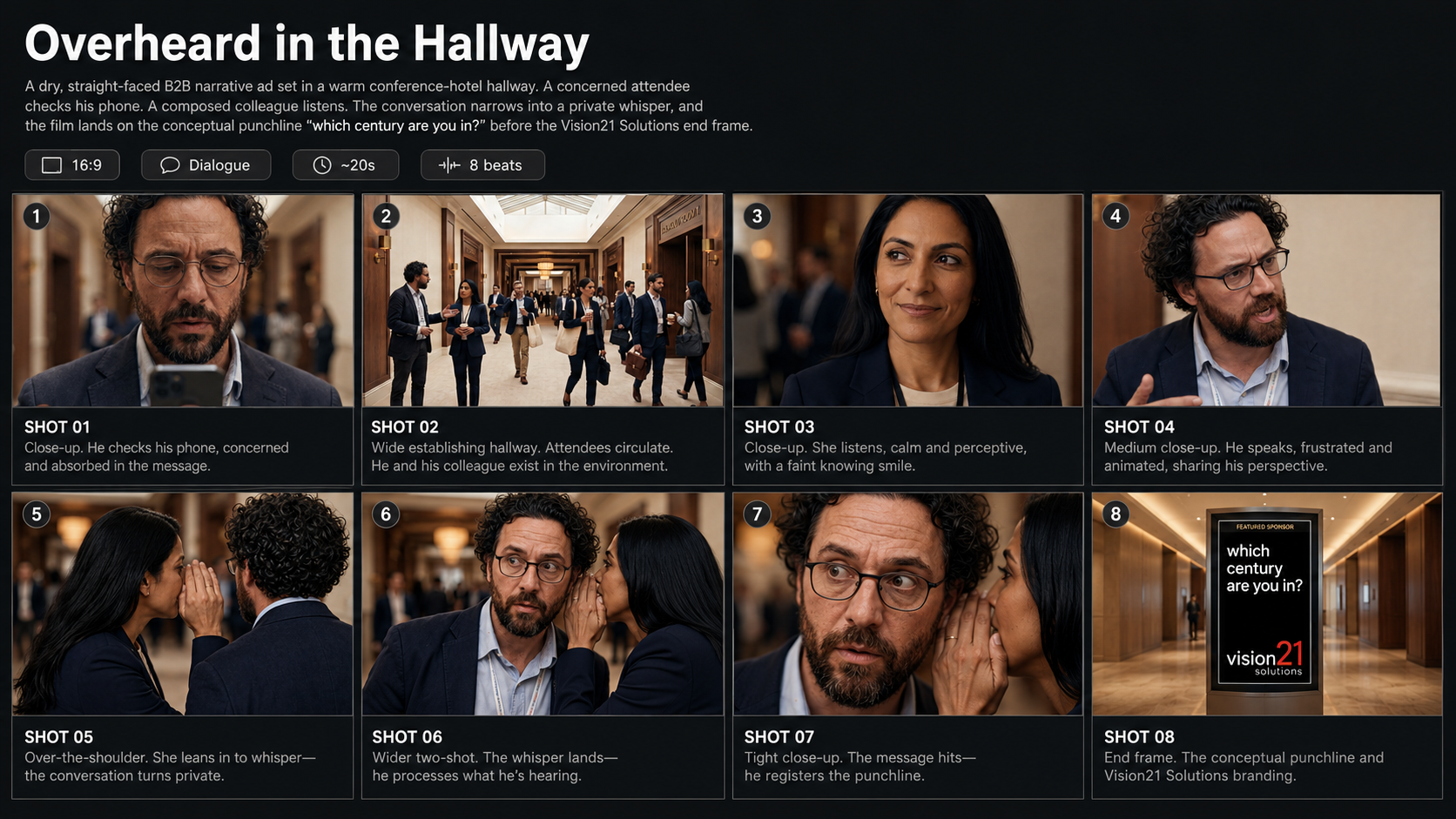
Four films, two worlds and both aspect ratios created eight cuts for investor and campaign use.
04 / Visual Intelligence
Vision21 as the answer to an experience visibly trapped in the previous century.
Elegant, assured and quietly future-facing.
The concept became believable by making the present problem easy to feel.
Provocative enough to reframe; polished enough for an investor audience.
Luxury lighting, tactile surfaces and controlled performance created desire.
Two cinematic worlds and one recurring character made an unbuilt product recognizable.
05 / The role of AI
Locked keyframes and image-to-video tools made the future visible. A shared visual grammar, recurring character and human-recorded ASMR hero line kept the work coherent and embodied.
06 / The result
Vision21 gained a clear position, a memorable creative proposition and a cinematic identity capable of carrying the concept before the physical product was ready.
Deeper questions
Start with the change it makes possible. The communication can establish the problem, the belief and the intended experience without pretending there is a finished product to demonstrate.
A question let the audience locate themselves inside the problem. “Which century are you in?” made the existing experience feel old before Vision21 appeared as the answer.
A strong concept film also creates language, characters, environments and a visual identity. Those assets can continue into launch, sales and campaign work as the product becomes real.