A character can look finished long before they are ready to carry a story. The silhouette works. The textures feel right. We know their name, their favorite color and what goes in their backpack. Then we put them in a scene, and discover we still don’t know what they would do.
That is where character development becomes interesting to me. Put two characters in front of the same problem. If they approach it differently, there is something to write.
Give a personality something to do
“Curious” is a useful beginning. It becomes a character choice when someone steps closer to the thing everyone else is unsure about. “Prepared” becomes funny when the bag packed for every possibility is the thing making the journey harder.
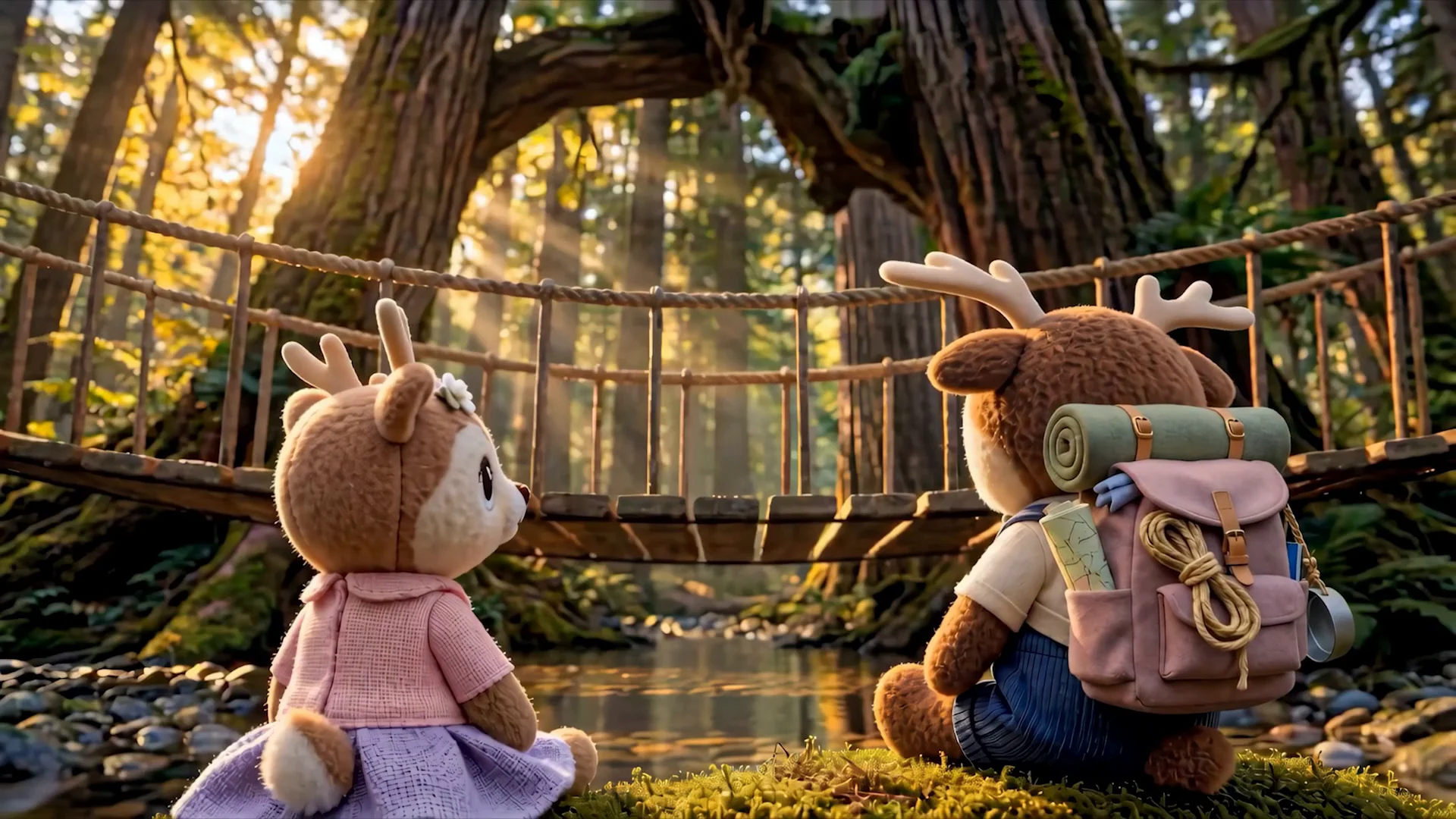
In Tiny Travelers — Pocket-Sized Adventures, Ollie’s backpack gives preparation a physical form. It affects how he moves, what he can reach for and how a moment plays. Juniper’s curiosity and willingness to help give that behavior someone to meet.
The relationship does the work. A stumble is a physical gag; another character offering a hand makes it a moment between friends. Those small choices establish what kind of company we are keeping.
Build the relationship before expanding the world
It is tempting to begin with a map: forests, rivers, mountains, all the places an adventure could go. I want to know who is walking through those places together. Who moves first? Who hangs back? Who helps without making the other person feel small?
The same location can produce very different stories depending on those answers. A bridge gives us an obstacle. The characters’ responses give us a scene.
For Tiny Travelers, episode one, The Giant Wobbly Bridge, is released, and the first two seasons are in development. I am writing, producing and directing on behalf of Big Time Toys. Developing that continuing series means thinking beyond a single successful moment: what will still feel true about these friends in the next adventure?
Let the audience’s experience shape the cast
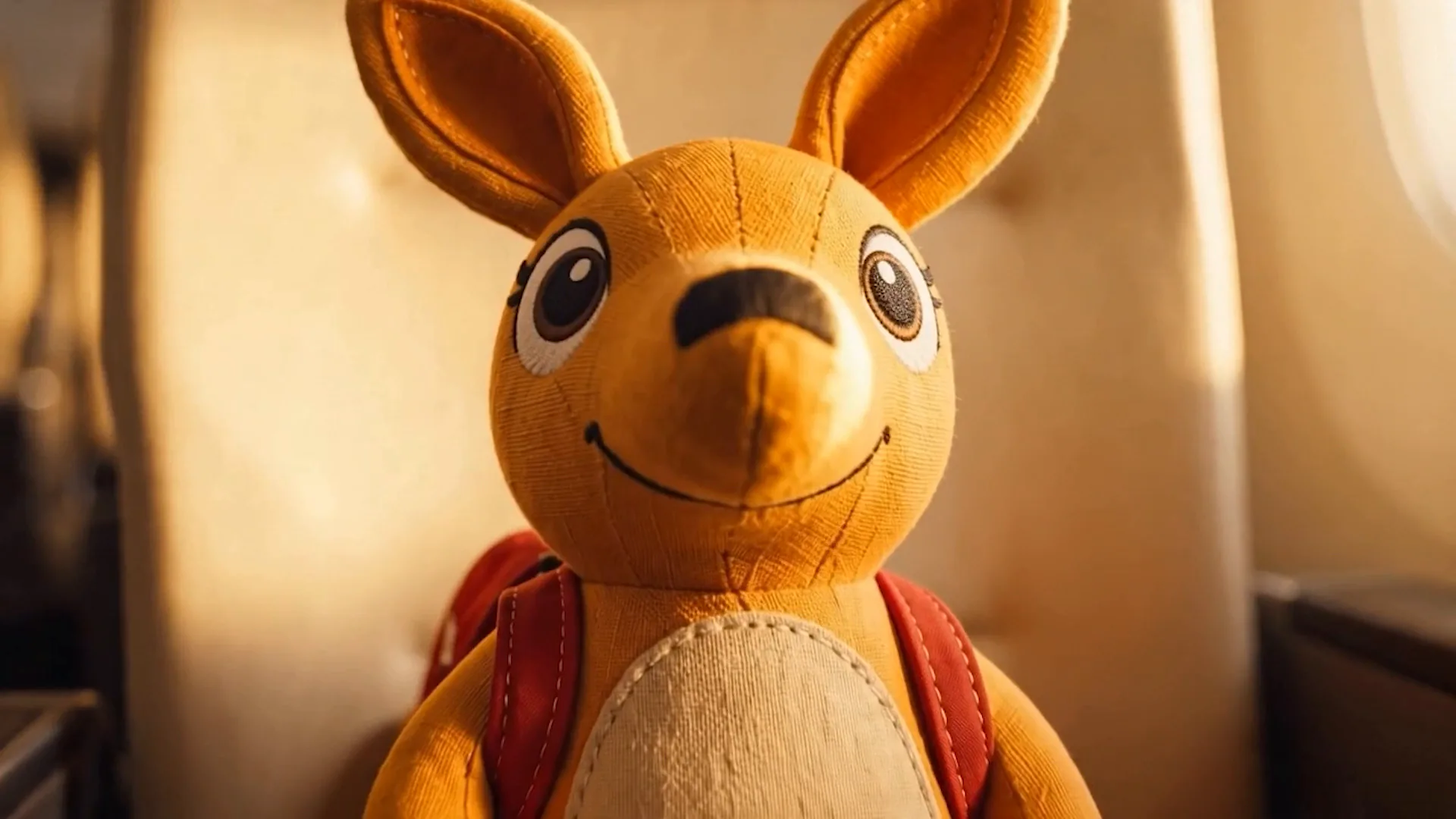
Joey Club Adventures starts with a different situation: being a child on a very long flight. An unfamiliar cabin, new food and a new place to sleep are already full of story possibilities.
The concept brings together a curious kangaroo, an easygoing koala, a button-loving galah and an elegant emu. Their differences offer several ways into the adventure. One child might recognize their own curiosity; another might need reassurance before joining in.
The creative proposition is simple: the Joey Club goes first, so kids feel brave. That gives the ensemble a purpose and helps determine the scale of the stories. The worries can be small and still matter enormously to the person feeling them.
Joey Club is an independent speculative HumanMedia concept. It was not commissioned by, produced for, endorsed by or affiliated with Qantas.
Direct for continuity of behavior
AI-assisted production makes it possible to explore character looks and filmable worlds quickly. It also creates a constant directing question: does this new shot still belong to the same character?
Appearance is part of that. So are movement, timing, voice, eye contact and how a character reacts to someone else. A visually consistent face can still feel like a different person if the performance changes without a reason.
The development material needs to be useful in production. Alongside reference images, I want clear behavioral rules, relationships and examples of how a scene should feel. That gives writing, image-making, performance and editing something shared to work toward.
Find the next story in the character
A useful test is to take away the original setting. Do we still know how this character might approach an unfamiliar situation? Can the relationship create another story without repeating the same gag?
That is what I want character development to leave us with: a cast whose next adventure we can imagine, and whose choices we want to watch.
Explore the work: Tiny Travelers · Joey Club Adventures.